

Care of the tree Acacia luederitzii or Kalahari-sand acacia |
|
The Acacia genus, of the Fabaceae family, includes some 1,200 species of shrubs and trees native to Australia, Africa, Asia and South America. Some species are: Acacia luederitzii, Acacia longifolia, Acacia karoo, Acacia iteaphylla, Acacia greggii, Acacia dodonaeifolia, Acacia dealbata, Acacia cultriformis, Acacia hebeclada, Acacia tortilis, Acacia truncata, Acacia saligna, Acacia paradoxa, Acacia tetragonophylla, Acacia melanoxylon, Acacia pendula. Common name: Kalahari-sand acacia. This species is native to South Africa. Acacia luederitzii is a thorny tree or shrub of wide bearing that can reach 10-15 meters (32-50 feet) height. It has pinnate leaves with dark green leaflets with hair on the margins. The flowers appear in globose groups and are cream colored. It blooms from early spring to early summer. Kalahari-sand acacia is often used as shade trees or shrubs to create informal screens and hedges. It is advisable not to plant it near buildings since its roots are invasive. It needs full or half-sun exposure and a frost-free warm and dry climate. The soil should drain very well, for which we will use a sandy, stony or rocky substrate. Kalahari-sand acacia is a drought tolerant plant whose desert habitat recommends moderate watering while waiting for the soil to dry up completely. It appreciates a light compost fertilizer in late winter. Acacia luederitzii tolerates formation prunings once flowering has finished. Kalahari-sand acacia is plant of easy cultivation and resistant to the usual pests and diseases. Propagation is easy from seeds sown in spring or autumn. Previously they must be immersed in boiling water for a few seconds. |
Images of the tree Acacia luederitzii or Kalahari-sand acacia |
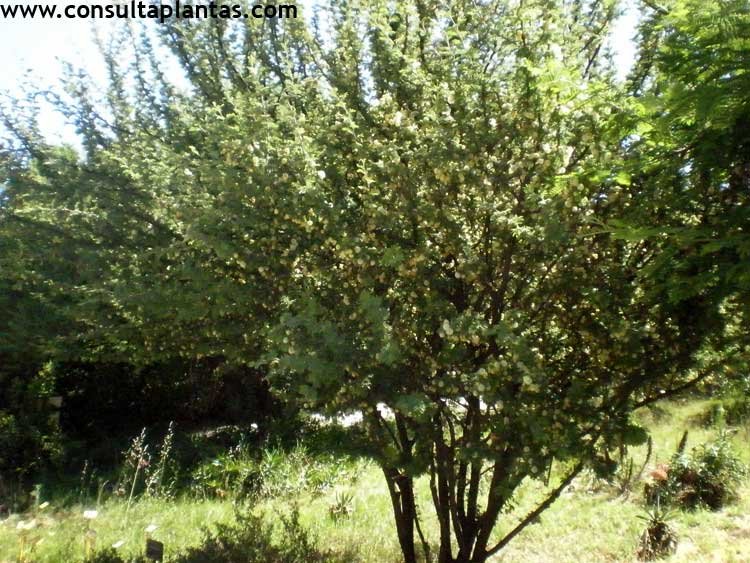 Acacia luederitzii 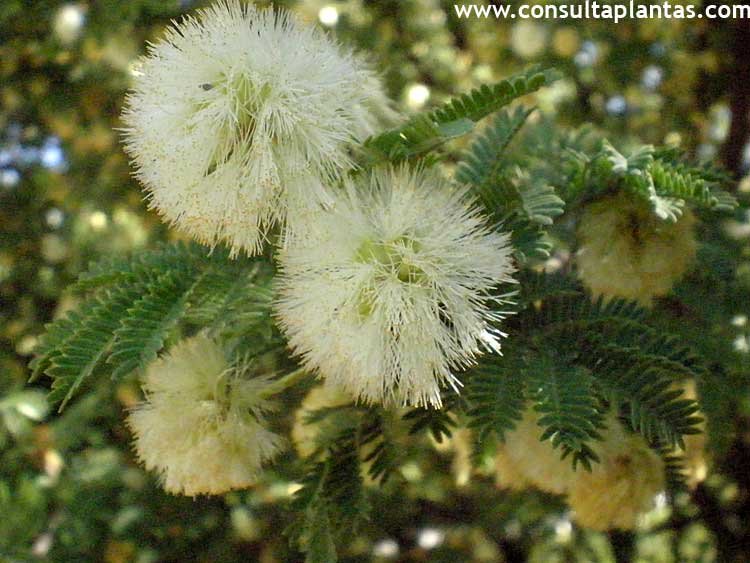 Acacia luederitzii |