

Care of the tree Acacia dealbata or Mimosa |
|
The Acacia genus, of the Fabaceae family, includes some 1,200 species of shrubs and trees native to Australia, Africa, Asia and South America. Some species of the genus are: Acacia dealbata, Acacia cultriformis, Acacia longifolia, Acacia hebeclada, Acacia tortilis, Acacia truncata, Acacia luederitzii, Acacia dodonaeifolia, Acacia saligna, Acacia paradoxa, Acacia tetragonophylla, Acacia melanoxylon, Acacia karoo, Acacia greggii, Acacia iteaphylla, Acacia pendula. Common names: Silver wattle, Blue wattle and Mimosa. This species comes from Australia. Acacia dealbata is a fast growing tree that reach 10 meters high, but in its natural environment they reach 30 meters (32.80 feet). The leaves are bipinnate, have small bluish-green leaflets on the upper side and have hair on the underside. It produces very perfumed yellow flowers grouped in small glomeruli. Blue wattle is used in areas of the garden protected from the wind as isolated specimens. It's also used in streets, walks and avenues. The flowers are used for floral decorations and bouquets. Acacia dealbata needs exposure to full sun and high temperatures; resists cold to 0 ºC (32 ºF). The ideal soil for these trees would be well-drained soil with gross sand, granitic sand and a little organic matter (leaf mulch, for example). Mimosa is drought resistant plant, so watering will be regular, waiting for the soil to dry. Fertilize with compost in late fall. It is advisable to prune it to give it shape, as it becomes huge and untidy. It can be pruned in full bloom and use the flowers for decorations and bouquets. Silver wattle is plant prone to attack by mealybugs. Mimosa can be propagated from seeds and by layering, but it is safer to buy it when it is a little grown. |
Images of the tree Acacia dealbata or Mimosa |
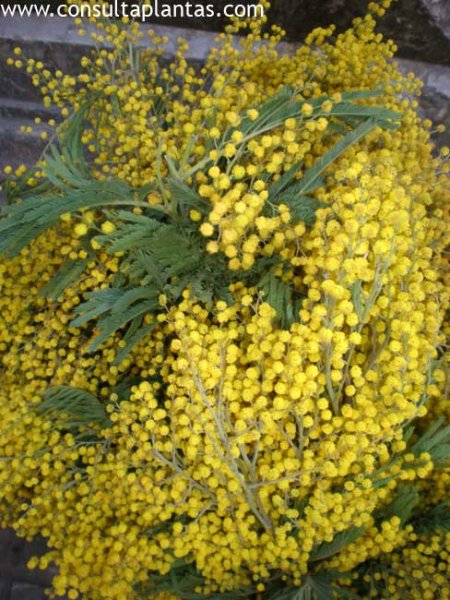 Acacia dealbata 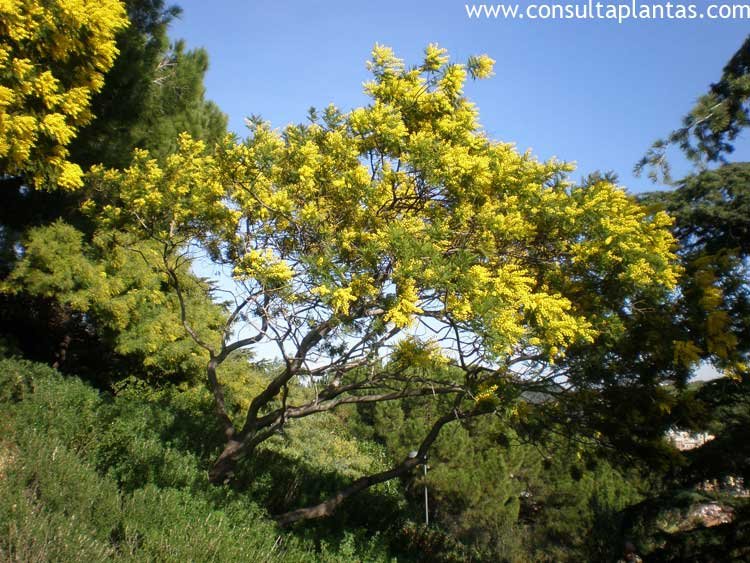 Acacia dealbata 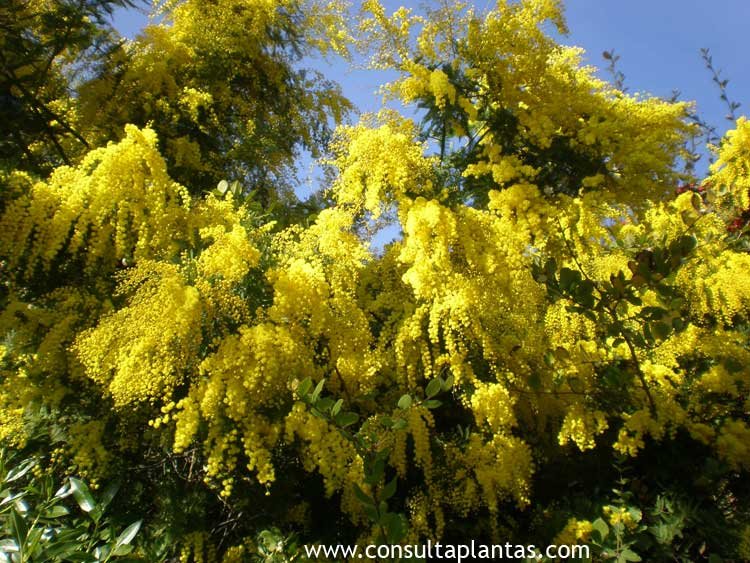 Acacia dealbata 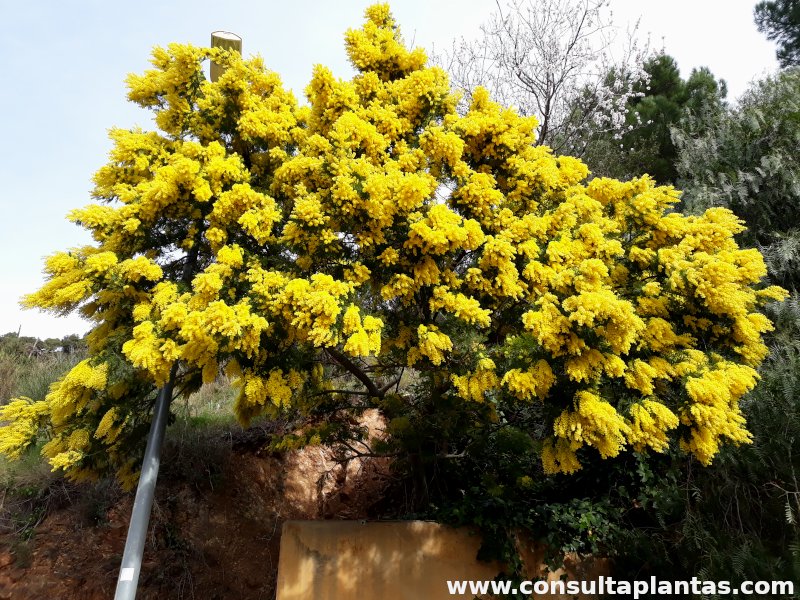 Acacia dealbata |